
BC Society of Transition Houses
Anti-Violence Advocacy
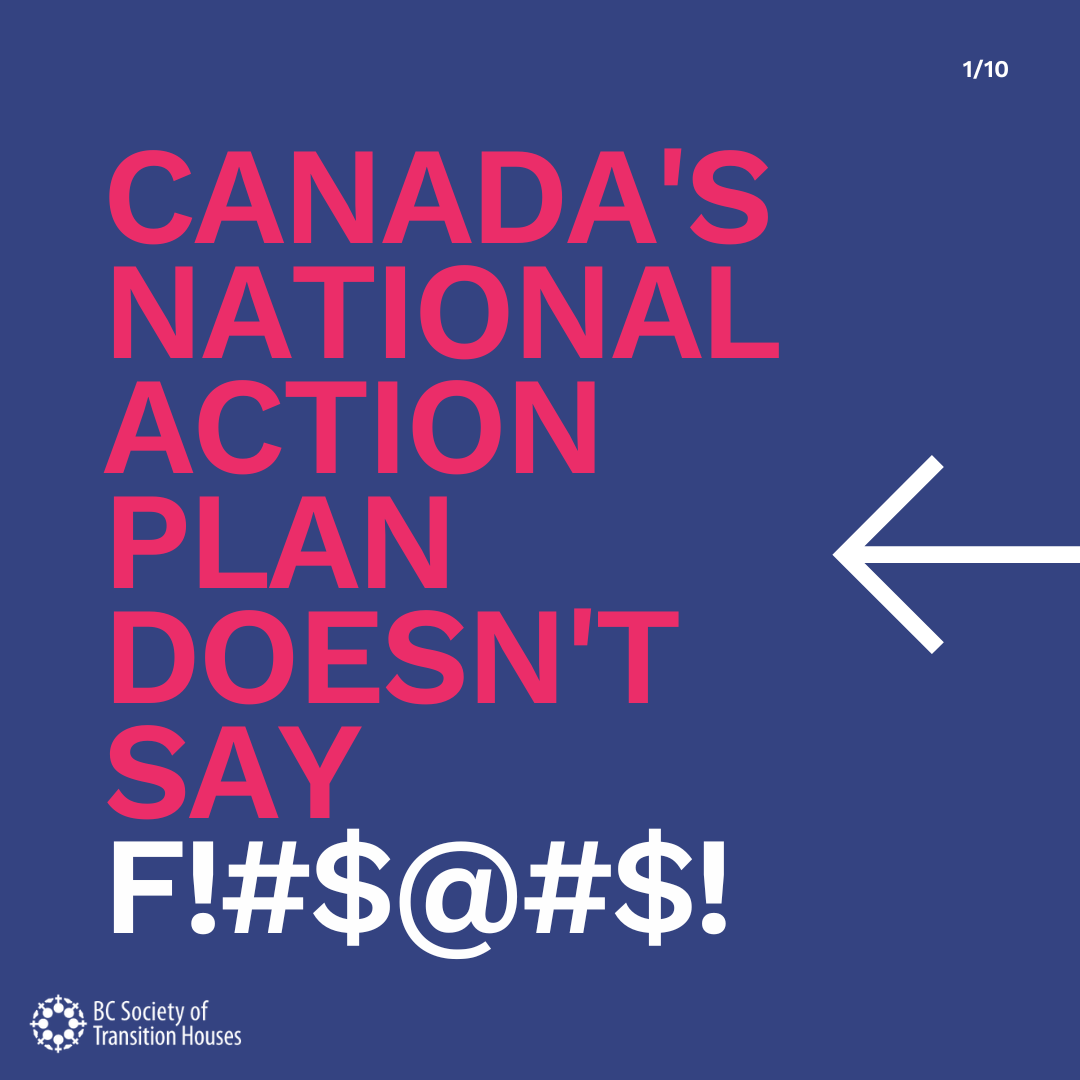
Anti-violence organizations had mixed reviews of Canada’s National Action Plan to Eliminate Gender-Based Violence and Violence Against Women. BCSTH wanted to raise awareness, while pushing for greater government accountability.
Overview
British Columbia Society of Transition Houses supports transition houses and shelters for women fleeing violence with public education, advocacy, and counselling for women and children.
BCSTH received a grant from Women’s Shelters Canada to raise awareness about the Canadian government’s National Action Plan to End Gender-Based Violence (NAP). It needed to be spent within five months.
Based on consultations with anti-violence organizations across Canada, the NAP aimed to provide a national strategy for the growing epidemic. On publication, many of these organizations expressed disappointment with the NAP’s shortcomings in a public letter they titled Roadmap to the NAP.
Brief
BCSTH leadership debated several options for a campaign including printing and distributing T-shirts or mugs. Ultimately, they decided to contract me to create a social media campaign for further reach and opportunity to convey their nuanced reaction to the new report.
Goals:
- To make the public aware of the new NAP.
- To advocate for improvements to the NAP.
- To press for more government accountability on the actions promised in the report.
Challenges
The NAP is a huge document, as is its critique, the Roadmap. Both are filled with complex information and lingo common to social service agencies but not to the general public.
Facebook and Instagram users often prefer entertaining escapism. Violence against women is confronting and upsetting. Government reports and calls for accountability risk being too dry.
BCSTH needed to offer truthful criticism in plain language without risking future funding.
My Approach
After reviewing the reports, I created a proposed strategy with deliverables, review and approval process, audience personas and recommended topics.
I proposed mixture of reels, videos and carousels – between 8 and 12 posts total. The final count would depend on the time it took us to work through revisions. I would produce the posts in three phases, so that we could refine as we went, according to BCSTH and audience preferences.
Collaborative Planning Sessions
My favourite way to work is in collaboration with clients. I find this approach is welcome within feminist non-profits which value consensus after consideration of diverse viewpoints.
In our opening discovery session, we discussed:
- Which parts of the NAP were most frustrating for their members,
- The circumstances most concerning for women in BC.
- We decided that I would gather supporting research and statistics with guidance from BCSTH.
Target Audience
- Target audience:
- Those members of the public sympathetic to the cause, but uninformed about the report or the scale of the crisis.
- People working or volunteering in this field,
- People touched by intimate partner violence.
I consistently reminded our group to review our choices from the viewpoint of people uninterested in reading government documents and unfamiliar with specific officials or policies.
- Would they understand it?
- Would they care?
- What would they find most surprising – even if it were old news to the people around the table?
We wanted to provide concerned citizens with talking points they could easily reference in private conversations or reshare on their own social platforms.
Let's Work Together!
I’m curious …. what message do you need to communicate?